25 dezembro 2022

ACTIVE VOICE x PASSIVE VOICE


* In the passive, the object of an active verb becomes the subject of a passive verb.

* The “by phrase” is used only it is important to know who performed the action. In the first example it is important to know who founded Microsoft, so “by Bill Gates and Paul Allen” is used. In the second example, however, “by them” is omitted because it is not important to say who will sort out the numbers.

ACTIVE                                                                    PASSIVE

Mary writes poems.                                                Poems are written by Mary.

Mary is writing poems.                                          Poems are being written by Mary.

Mary wrote poems.                                                 Poems were written by Mary.

Mary was writing poems.                                       Poems were being written by Mary.

Mary will write poems.                                          Poems will be written by Mary.

Mary is going to write poems.                                Poems are going to be written by Mary.

Mary can write poems.                                           Poems can be written by Mary.

Mary should write poems.                                      Poems should be written by Mary.


When to use the passive

* When the object of an active sentence is more important than the subject. If you say “Frank O. Gehry designed the Guggenheim Museum in Bilbao”, you are more interested in what Frank O. Gehry did; he is the important part of what you want to say. Now if you say, “The Guggenheim Museum in Bilbao was designed by Frank O. Gehry”, the main focus is on the museum.

* When we don’t know who performed the action. Three banks were robbed last week.

* When it is preferable not to mention the performer.


1. In which country is the traditional musical wedding march called the “Zaffa” performed? Egypt. They have traditional Egyptian music, belly dancers, drum horns and performers with flaming swords. Egyptians also believe that the ring finger has the “vein amoris”, the vein of love, which runs straight to the heart.

2. How long does a traditional Moroccan wedding ceremony usually last? Four to seven days. After the couple say their vows, and before the new bride can become the mistress of her new home, she must walk around her house three times.

3. What color signifies happiness when used in a wedding in China? Red. Red signifies love, joy and prosperity and is used in several different ways in Chinese wedding traditions. The homes of both the bride and groom are usually decorated in red on their wedding day.

4. In what country is the bride-to-be painted in pure white from head to toe? Japan. This is done to show the bride's maiden status to the gods.

5. What color is it custom for an Israeli bride to wear with her wedding dress? Blue. This custom originated in ancient Israel. The bride would wear a blue ribbon to symbolize her fidelity.

6. In what country might the friends of the bride plant a tree in her yard and decorate it with ribbons and painted eggshells? Czech Republic. According to legend it is believed that the bride would live as long as the tree. The night before her wedding her friends also give the bride a crown of rosemary to represent wisdom, love, loyalty, and remembrance.

7. In which country are church weddings not considered official? Russia. Couples wanting to get married must exchange vows at a Russian marriage civil ceremony. The bride and groom are given bread and salt to symbolize health, prosperity, and long life.

8. The custom of the bride wearing a white wedding gown began in which country? France. This tradition began several hundred years ago. The French also started the tradition of the hope chest.

9. In ancient times brides from which country wore wedding veils of yellow or red which represented fire? Greece. These colorful veils were supposed to ward off evil spirits and demons.

10. In early American weddings what accessory would brides wear with their wedding gowns? Gloves. The gloves were symbols of modesty and romance. Take the ‘g’ away and you have a ‘pair of loves’.

11. In which of the following would a priest performing the wedding ceremony bless a plate of coins and give them to the groom? Puerto Rico. After the couple exchanges vows the groom give the plate of coins to his bride, which she keeps as a present from her husband. The coins represent good luck and prosperity for the newlyweds.

12. In which country does the mother of the groom and the father of the bride escort the couple down the aisle and stand next to them during the ceremony? Argentina. Bridesmaids, a maid of honor, or a best man are not part of a traditional wedding in Argentina.

13. What is placed on top of a wedding cake in Bermuda? A tiny sapling. After the wedding, the newlyweds plant the young tree and watch it grow as their marriage grows.

14.  In which country is it a custom to build an arch of pine branches in front of the bride’s family home? Denmark. This arch is called the Gate of Honor. When a couple celebrates their silver anniversary another Gate of Honor is built.

15. In which country might you find a piñata hanging from the ceiling? Mexico. It is usually shaped as a heart or an animal. Children swat at the piñata and the treats are shared by all the guests.

11 dezembro 2022

FELICIDADE

Não se preocupem: não vou dar, pois não tenho, receita de ser feliz. Não vou querer, pois não consigo, dar lição de coisa alguma. Decido escrever sobre esse tema tão gasto, tão vago, quase sem sentido, porque leio sobre felicidade. Recebo livros sobre felicidade. Vejo que, longe de ser objeto de certa ironia atribuída somente a livros de autoajuda (hoje em dia o melhor meio de querer insultar um escritor é dizer que ele escreve autoajuda), ela serve para análises filosóficas, psicanalíticas. Parece que existe até um movimento bobo para que a felicidade seja um direito do ser humano, oficializado, como casa, comida, dignidade, educação.

Mas ela é um estado de espírito. Não depende de atributos físicos. Nem de inteligência: acho até que, quanto mais inteligente se é, mais possibilidade de ser infeliz, porque se analisa o mundo, a vida, tudo, e o resultado tende a não ser cor-de-rosa. Posso estar saudabilíssimo e infeliz. Posso ter montanhas de dinheiro, mas viver ansioso, solitário. Talvez felicidade seja uma harmonia com nós mesmos, com os outros, com o mundo. Alguma inserção consciente na natureza, da qual as muralhas de concreto nos isolam, ajuda. Mas dormimos de cortinas cerradas para não ver a claridade do dia, ou para escutar menos o rumor do mundo (trem passando embaixo da janela não dá). Tenho um amigo que detesta o canto dos pássaros, se pudesse mataria a tiro de chumbinhos os sabiás que alegram minhas manhãs. Um parente meu não suportava praia, porque o barulho do mar lhe dava insónia.

Portanto, cada um é infeliz à sua maneira*. Acho que felicidade também é uma predisposição genética: vemos bebês e criancinhas mal-humorados ou luminosos. Parte dela se constrói com projetos e afetos. O que se precisa para ser feliz? Me perguntam os jornalistas. Melhor seria: O que é preciso para não ser infeliz? Pois a infelicidade é mais fácil de avaliar, ela dói. Concordo que felicidade é uma construção laboriosa quando se racionaliza: melhor deixar de lado, ela vai se construir apesar dos nossos desastres. Difícil ser O feliz assistindo ao noticiário, refletindo um pouco e vendo, por exemplo, que as bolsas despencam no mundo todo, os dinheiros derretem, muitas vidas se consumiram por nada, muita gente boa empobrece dramaticamente, muita gente boa enriquece (não direi que os maus enriquecem com a desgraça dos bons porque isso é preconceito burro). Enquanto a histeria coletiva solapa grandes fortunas ou devora pequenas economias juntadas com sacrifício, Obama, de quem ainda sou fá, aparece elegante e pronuncia algumas de suas frases elegantes, mas aparentemente não diz grande coisa porque na legenda móvel embaixo de sua bela figura as bolsas continuam a despencar. Vamos consumir, vamos poupar, vamos desviar os olhos, vamos fazer o quê? Talvez em conjunto gastar menos, pensar menos em aproveitar a vida, e trabalhar mais - mas aí a gente reclama, queremos é trabalhar menos e gastar mais.

Aqui entre nós, vejo uma reportagem sobre a gastança de nossas crianças e jovens. Gostei do ténis azul, do amarelo e do rosa, diz uma menininha encantadora. Ah, e do lilás também. "Qual a senhora vai comprar?", pergunta a repórter. A mãe, • também encantadora, ri: "Acho que todos". Está decretada a dificuldade de ser feliz, pois, se eu quero todas as cores, todas as marcas, todos os carros, todos os homens ricos e mulheres bonitas, preparo a minha frustração, portanto a infelicidade. Na ex-fleumática Inglaterra, bandos de jovens desocupados destroem bairros de Londres e cidades vizinhas. Seu terror são pobreza, desemprego, falta de assistência para os velhos e de futuro para os moços. Não há como, nessa condição, pensar em ser feliz. A gente quer mesmo é punir, destruir. talvez matar. Complicado.

Uma boa rima para felicidade pode ser simplicidade. Ainda tenho projetos, sempre tive bons afetos. O que mais devo querer? A pele imaculada, o corpo perfeito, a bolsa cheia, a bolsa ou a vida? Acho que, pensando bem, com altos e baixos. dotes e amores, e cores e sombras, eu ainda prefiro a vida.

                                 Lya Luft. Veja 17 ago 2011


O romancista russo Leon Tolstói (1828-1910), retratado na imagem, afirmou que “todas as famílias felizes são iguais, mas as famílias infelizes são infelizes cada uma da sua maneira”. 

O BONEQUINHO VIU - AVALIAÇÃO DE RESENHA


08 dezembro 2022

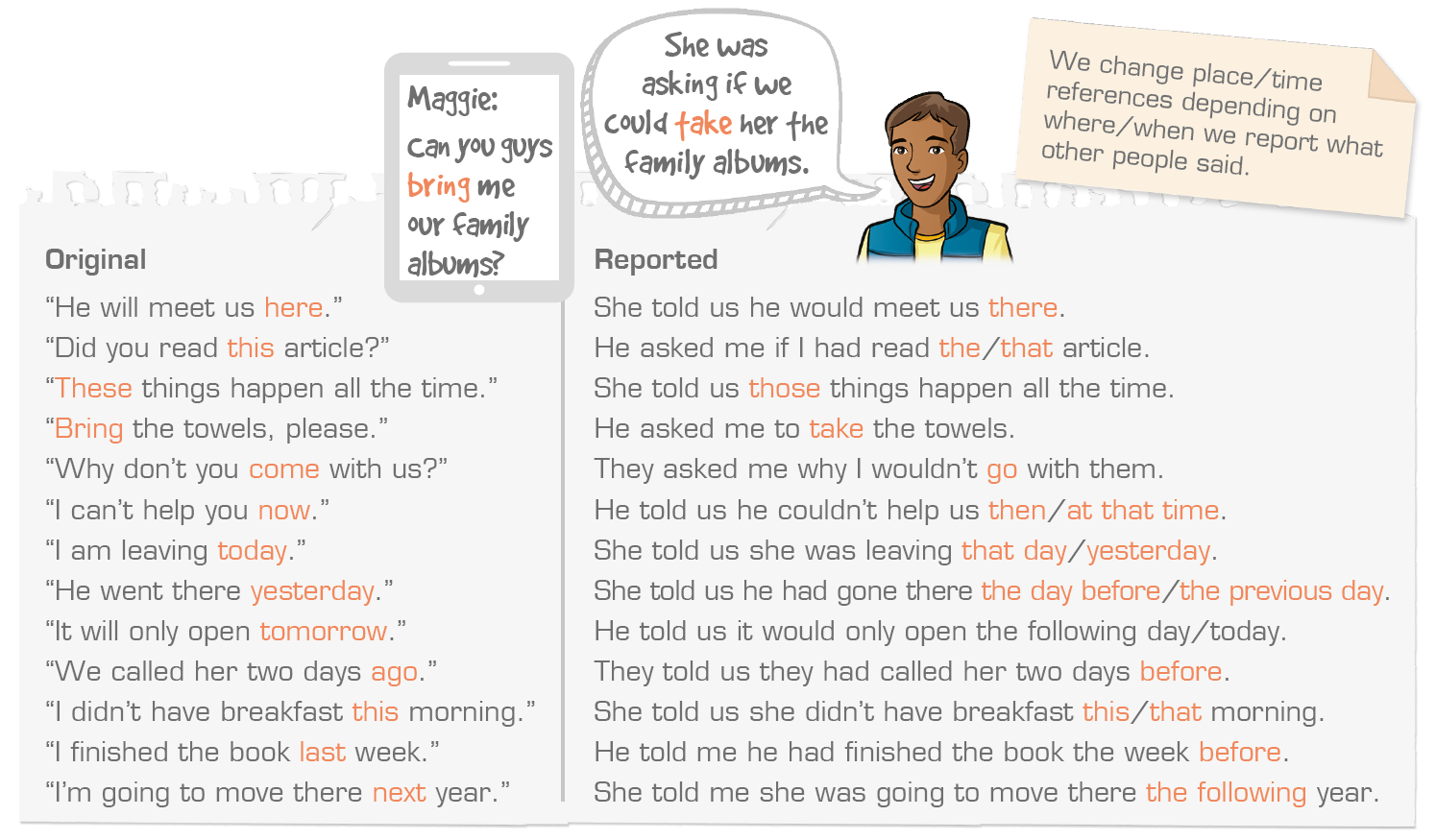
INDIRECT/REPORTED SPEECH


Exercise 1

Who said what? Match the people with the quotations, and then change them into reported speech.

(A) Archimedes                                                        

(B) Descartes                         

(C) George Orwell                                                   

(D) Hamlet                            

(E) John F. Kennedy                                               

(F) John Lennon                  

(G) Julius Caesar                                                      

(H) Martin Luther King


1. (B) I think, therefore I am.

2. (  ) Ask not what your country can do for you, but ask what you can do for your country.

3. (  ) I have a dream that my four little children will one day live in a nation where they will not be judged by the color of their skin, but by the content of their character.

4. (  ) There is something rotten in Denmark.      

5. (  ) The dream is over.

6. (  ) I have found it!

7. (  ) All animals are equal, but some animals are more equal than others.      

8. (  ) I came, I saw, I conquered.


1. Descartes concluded that he thought, and therefore he was.  

2. ______ told American citizens ______.

3. ______ declared ______.

4. ______ said ______.

5. ______ announced ______.

6. ______ shouted ______.

7. ______ said ______.

8. ______ stated ______.


Exercise 2

Tom Richards and Celia Jones went together to the premiere of their movie Love, indeed, and the reporters grew suspicious. Report what they asked.

George: Are you dating?

Melissa: Have you gotten involved during the shootings?

Peter: When are you going to get married?

Lauren: What can the audience expect from the movie?

Brian: Did you travel together to Cancun?

Ethan : Why don’t you answer our questions?


1. George asked if they were dating.

2. Melissa asked ______.

3. Peter asked ______.

4. Lauren wanted to know ______.

5. Brian insisted in knowing ______.

6. Ethan asked ______.


Exercise 3

Laura and Claire met each other in New York last Saturday. Today is Monday and you’re in Philadelphia. Report their conversation.

Laura: Claire! This is a great surprise. The last time you dropped in was two months ago.

Claire: Yes, I’ve been very busy since I moved to Newark.

Laura: And what are you doing here today?

Claire: I was invited to a costume party tomorrow and I have to buy my costume.

Laura: You came to the right place. We carry a good variety of them.

Claire: I’m sure of it. The store is very well known.

Laura: Do you have anything in mind?

Claire: I thought of dressing as a flamenco dancer. What do you think?

Laura: I like it, and you can take a bullfighter’s costume for your husband.

Claire: Wow! We’ll be the hit of the party.


1. First, Laura said that ______ and then she remembered that ______.

2. Claire told her ______.

3. Then Laura asked Claire ______.

4. Claire explained that ______ and that ______.

5. Laura assured Claire ______ and added that ______.

6. Claire said ______ and admitted that ______.

7. Laura wanted to know ______.

8. Claire, then, told her ______ and asked ______.

9. Laura said ______ and added that ______.

10. Claire got enthusiastic and said ______.

Exercise 4

Choose the correct verb forms according to Jane’s story.


INDIRECT/REPORTED SPEECH - ORAL PRACTICE

STUDENT A

 You are the HR manager and you were out of the office for two weeks. Today, March 17th, you’re back and you want to get acquainted with what happened. Student B is your co-worker and will tell you what went on. Use the dialog to guide your conversation.


A: Hi, ______. How’re things around here?

B: …

A: I thought that would happen. What’s the first one?

B: …

A: And, did you send them?

B: …

A: Great, who else called?

B: …

A: Ok. I’ll give her a call today. How about the bank?

B: …

A: That’s good. Is that all?

B: …

A: Hum. I think I’ll forget to call him. Thanks a lot.

B: …


 Now, change roles. You are going to tell the manager what went on during the weeks he/she was out. Use the dialog and the message notes to guide you. Remember to use indirect speech.


Date: March 4th

Date: March 7th

Date: March 12th

Date: March 6th

From: Mrs. O’Neil

From: Ouvert Company

From: The lawyer

From: mother-in-law

Message: She sent you the reports 2 days ago

Message: Will schedule a live conference today

Message: Documents are supposed to be ready tonight

Message: “Are you going to visit me next week?”


B: …

A: Just fine. But you have some messages.

B: …

A: Let me see. On Tuesday the 4th, Mrs. O’Neil called to say that…

B: …

A: They are on your desk.

B: …

A: Yes, he did and he said he…

B: …

A: The lawyer called on the 12th and said that…

B: …

A: And one last message. Your mother-in-law called on the 6th. She wanted to know if you…

B: …

A: Any time.


STUDENT B


Look at the messages you took for the HR manager and complete the dialog. Remember to use indirect speech.


Date: March 10th

Date: March 6th

Date: March 11th

Date: March 14th

From: Insurance Company

From: Mrs. Spencer

From: Bank

From: brother-in-law

Message: The contracts were sent last week.

Message: Are you going to be in tomorrow?

Message: Money was transferred yesterday

Message: “Can you lend me some money this week?”


A: …

B: Everything was fine. You have some messages though.

A: …

B: Well, let’s see. On Monday the 10th, the insurance company called to say that…

A: …

B: Yes, and they’re on your desk.

A: …

B: Mrs. Spencer. She wants to know if...

A: …

B: The bank called on the 11th and said…

A: …

B: One last message. Your brother-in-law called you on the 14th and asked if you…

A: …

B: My pleasure.


Now, change roles. You are the manager and need to know what went on while you were away. Use the dialog to guide your conversation.

B: Good (morning/afternoon/evening), ______. How was everything during the past two weeks?

A: …

B: I had a feeling I had some. Who called me?

A: …

B: Oh, great! Where are they?

A: …

B: Thanks. Did the manager from the Ouvert Company leave a message?

A: …

B: I really need to see that. Anything else?

A: …

B: That’s excellent. We need to check those documents.

A: …

B: I know. She found me at home. Thanks for your help.

A: … 


Exercise 1

2. (E)  3. (H) 4. (D) 5. (F)   6. (A) 7. (C) 8. (G)

2. John F. Kennedy told American citizens not to ask what their country could do for them, but to ask what they could do for their country.

3. Martin Luther King declared he had a dream that his four little children would one day live in a nation where they would not be judged by the color of their skin, but by the content of their character.

4. Hamlet said there was something rotten in Denmark.

5. John Lennon announced the dream was over.

6. Archimedes shouted he had found it.

7. George Orwell said all animals were equal, but some animals were more equal than others.

8. Julius Caesar stated that he had come, he had seen, and had conquered.

Exercise 2

2. if/whether they had gotten involved during the shootings.

3. when they were going to get married.

4. what the audience could expect from the movie.

5. if they had traveled together to Cancun.

6. why they didn’t answer their questions.

Exercise 3

1. it was a great surprise / the last time she had dropped in had been two months before.

2. she had been very busy since she had moved to Newark.

3. what she was doing there that day.

4. she had been invited to a costume party the following day - she had to buy a costume.

5. she had gone to the right place / they carried a good variety of them.

6. she was sure of that / the store was very well known.

7. if Claire had anything in mind.

8. she had thought of dressing as a flamenco dancer / what Laura/she thought.

9. she liked it / she could take a bullfighter’s costume for her husband.

10. they would be the hit of the party

Exercise 4

had frozen – that – the day before – had been – had stared – laughed – could have gotten – the following day – was going to – had been – knows


MAP (4) - OS ARGONAUTAS